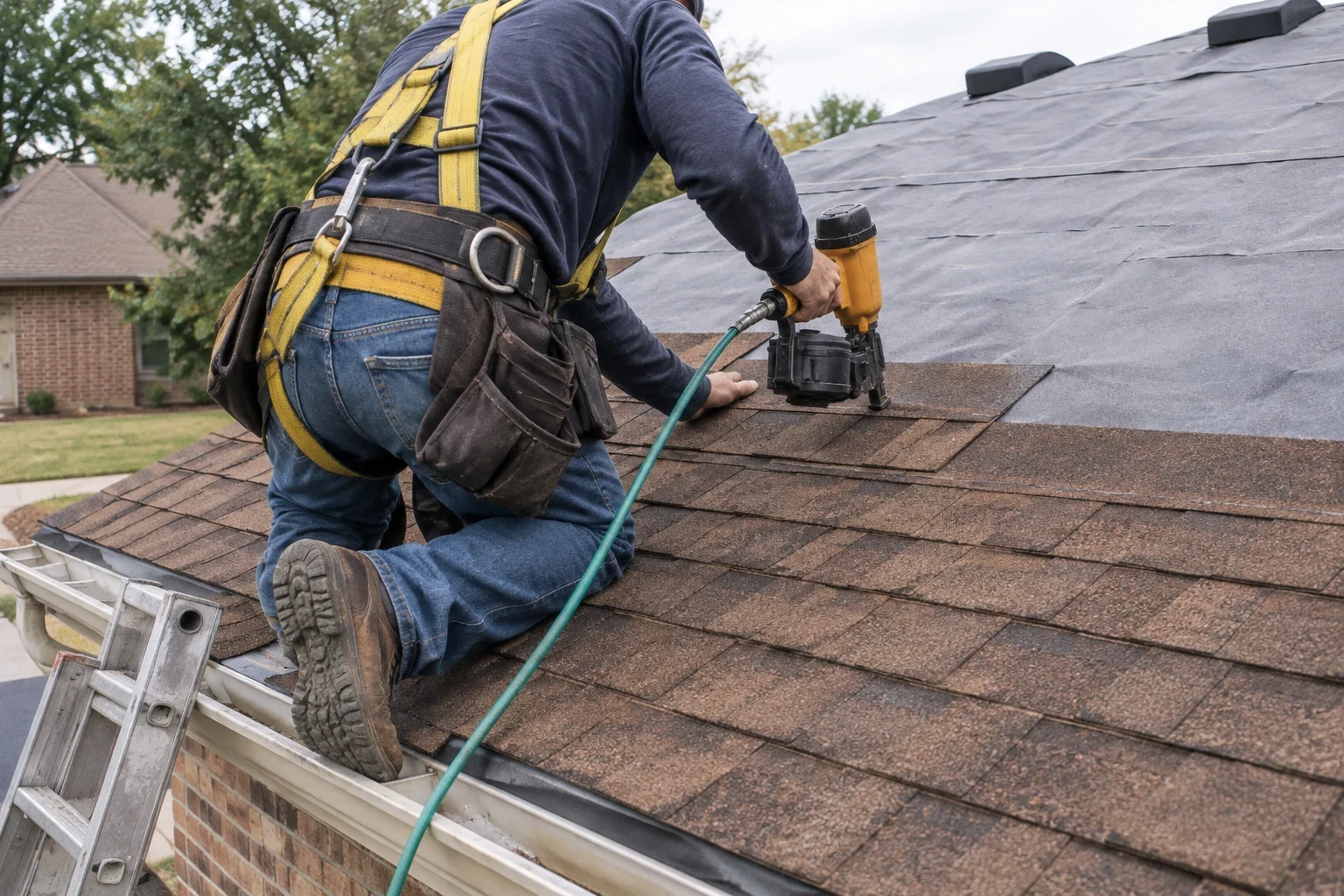
ServicesResidential Roofing
Residential Roofing in Lancaster, TX
We get up on your roof, describe what we find in everyday language and show how each option affects your house and your budget. Your written estimate takes only minutes to read, and you never have to decide on the spot.
Roofing work explained before it starts
Nearly every call we get comes down to two things: what is happening on the roof, and what it will take to handle it. We give you a direct answer to each. When the damage is confined to a small section, you hear that from us. When the shingles are worn out across the board, we tell you honestly and point to the evidence.
Our residential roofing work covers asphalt shingle roofs, the underlayment under them, the flashing at chimneys and walls, and the vents that move hot air out of your attic. Long North Texas summers dry shingles out, so we look closely at airflow and at how well the shingles are keeping their granules.
The choice about what comes next belongs to you. Our part is giving you clear facts to choose with.
What our residential roofing work includes
- A walk of the whole roof
- We look at the full roof, not just the spot you noticed. Shingles, valleys, flashing, vents and the edges all get checked so nothing is missed.
- Photos of what we find
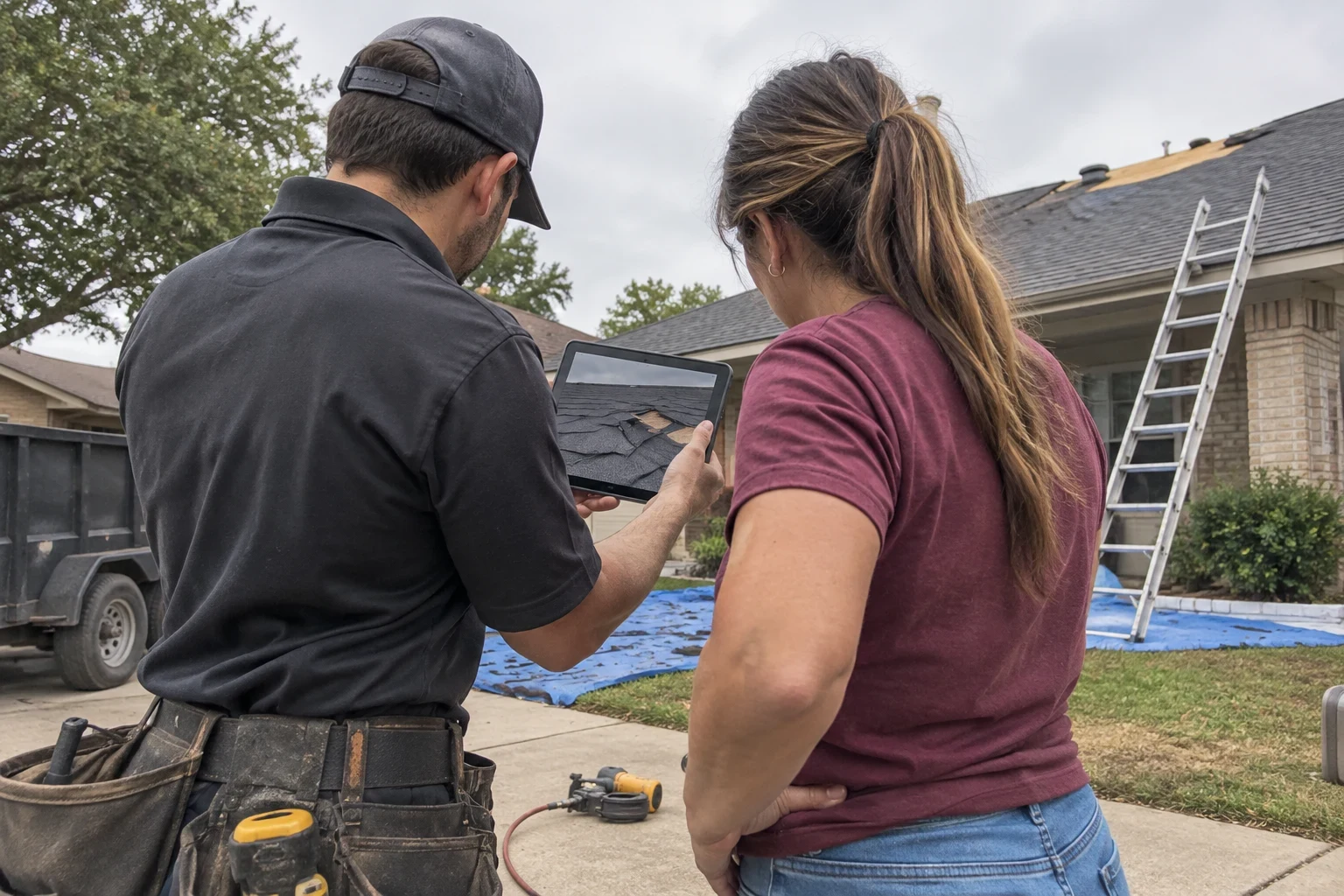
- We take pictures of problem areas and walk you through them. You see the same thing we see, which makes the conversation much easier.
- Decking and underlayment checks
- Soft or stained wood decking changes the job, so we check it before quoting. If something can only be confirmed once shingles come off, we tell you that up front and explain how it would be handled.
- Flashing and penetrations
- Chimneys, pipe boots, skylights and wall joints are where many leaks start. We seal or replace flashing properly instead of covering it with a layer of caulk.
- Attic ventilation
- Good airflow keeps shingles from cooking and helps your attic stay cooler. We match intake and exhaust vents to the size of your roof.
- Cleanup and a final walk
- We protect landscaping and run magnets over the yard and driveway for nails. Before we leave, we walk the property with you.
Signs your roof needs attention
Grit near the downspouts
Sandy granules piling up where downspouts empty mean the shingles are wearing down. That coating is what shields them from the sun.
Curling or cracked shingles
Lifted or split edges let wind and rain slip underneath. Older roofs that have sat through many hot summers show this often.
Water marks inside
A tan ring on a ceiling or darkened boards in the attic usually point to a leak somewhere above. Water tends to run along rafters before it drips, so the spot where it gets in can sit well away from the stain. We trace it back to where it starts.
Missing shingles after high wind
Losing even a handful of shingles exposes the underlayment. Have it looked at before the next storm rolls through.
A hot, stuffy attic
An attic that traps heat can wear shingles out early and push cooling bills up. Weak ventilation is the usual culprit.
What drives the cost of a house roof
A fair price takes seeing your roof in person, so we won't guess on the phone. Below are the things that move the total the most. Each one appears on your written estimate with a note on how it applies to your home.
How large and steep the roof is
More roof means more shingles, more underlayment and more labor. A steep pitch calls for harnesses and roof jacks, and the crew has to work slower to stay safe.
The material you choose
Architectural shingles, impact-rated shingles and metal each carry a different price. We explain how each one handles heat and hail so you can balance cost against how it performs.
Condition under the shingles
Rotten decking or tired underlayment adds work. Problems we can see are priced from the start, and we explain ahead of time how we would deal with any we can't.
Old layers and roof access
Removing more than one existing layer takes longer. A tight lot, tall trees or a detached garage can also add labor.
Permit and ventilation costs
Permit fees and any new or upgraded attic vents get their own lines on the estimate, so you know about them before work begins.
How a roofing job runs, start to finish
- 1
A quick call to schedule
Describe what you've noticed and we pick a visit time that suits your week. There is no charge for the estimate.
- 2
We look and explain
We check the roof and attic, photograph what matters and talk through what caused it. Your written, line-item estimate lays the options next to each other.
- 3
Prep on work day
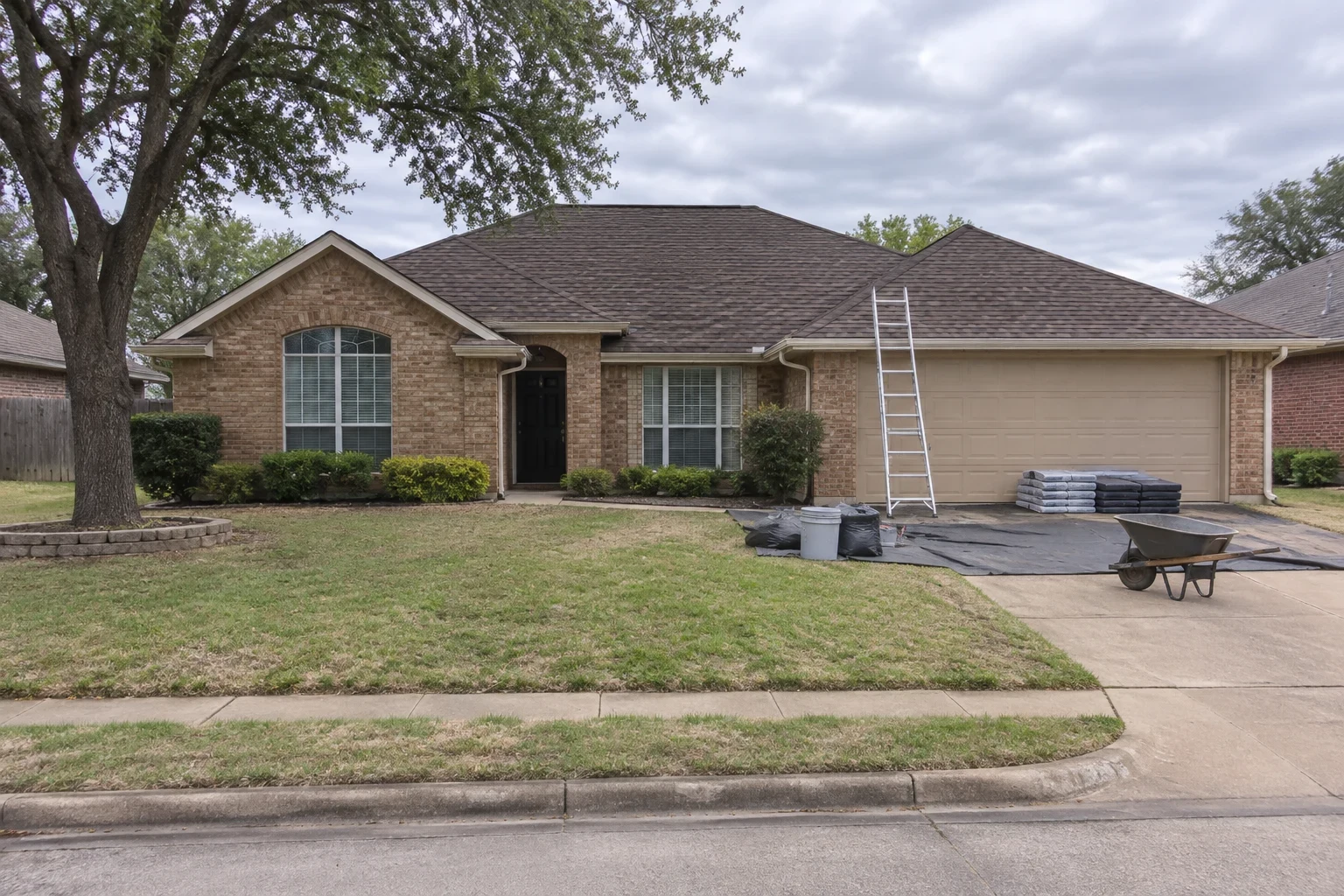
Shrubs get covered, tarps go down along the house and we park to keep your driveway open when possible. We pull the permit if the job needs one.
- 4
The work itself
The crew moves section by section so your home is never left exposed to weather. If hidden damage turns up, we pause, show you photos and agree on next steps first.
- 5
Cleanup and walkthrough
Debris is hauled away, the ground is swept for nails and we tour the finished job with you. We answer every question before loading up.
Common questions about home roofing
Will you say so if my roof doesn't need replacing?
Yes. When the trouble is in one spot and the rest of the shingles are in good shape, we tell you plainly. Our photos let you see the condition for yourself. We aim for the fix your home needs, not the biggest bill.
How long will the job take?
After we begin, a lot of single-family roofs are finished in one to two days. A bigger house, a steep slope or decking damage found at tear-off can add time. We give you a realistic schedule when we go over the estimate and keep you posted if weather changes it.
Does someone have to be home during the work?
Not really. We like a short chat when the crew shows up and a walk around with you at the end. In between, we just need access to the outside of the house, and to the attic if needed.
Which roofing material fits this area?
Most homes in Lancaster and nearby towns like DeSoto and Cedar Hill have asphalt shingles, which do well when the attic is properly ventilated. Impact-rated shingles cost more, handle hail better and could lower your insurance premium, so ask your agent. We explain the pros and cons of each in plain language.
How much noise and mess should I expect?
Tearing off and nailing make noise, so plan on a loud day or two. We cover your plants, catch debris on tarps and run magnets over the yard and driveway for nails before we go.
Find out what your roof really needs
One call gets someone out to look, explain the cause and walk you through your options. The estimate is free, and the decision stays yours.