ServicesCommercial Roofing
Commercial Roofing in Lancaster, TX
A leak over your sales floor or stockroom costs you more than a wet ceiling tile. We work on flat, low-slope and metal roofs for small businesses, and we tell you plainly what caused the problem, what fixes it and what moves the price.
Roofs Built for Buildings That Stay Open
Commercial roofs fail differently from the shingle roof on a house. Most are flat or nearly flat, so water drains slowly, and one weak seam or clogged drain can let it sit for days. Membranes shrink and crack under long summer heat, and rooftop equipment brings foot traffic and dozens of penetrations that each need sealing.
We start by finding the cause, not just the wet spot. Then we lay out your options side by side, from a targeted fix or coating to a new membrane, with the reasons for each. You choose with the facts in front of you.
What Our Commercial Roofing Work Covers
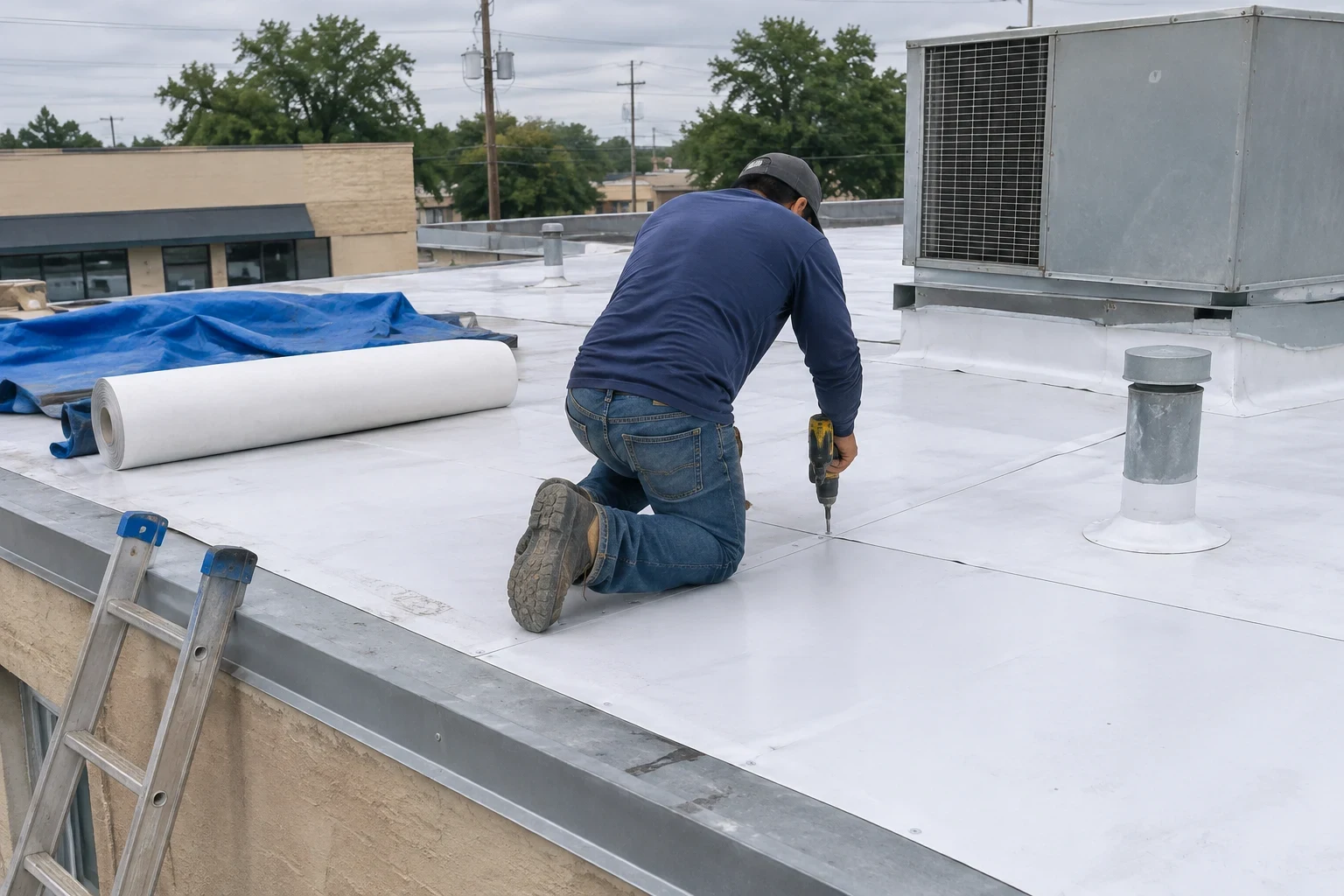
TPO and single-ply membranes
We install and work on white TPO and other single-ply systems. Seams are heat-welded, which is where most of the long-term strength comes from.
Modified bitumen
Torch-down and cold-applied modified bitumen holds up well under foot traffic, so it suits roofs with frequent equipment service visits.
Metal roof systems
We handle standing seam and exposed-fastener metal roofs, including loose fasteners, worn washers and rust at panel laps.
Roof coatings
On a sound roof, a silicone or acrylic coating can seal small cracks and reflect heat. We only suggest it when the surface underneath is dry and solid enough to hold it.
Flashing, curbs and penetrations
HVAC curbs, vent pipes, parapet walls and skylights are where most leaks start. We reseal or rebuild the flashing around them.
Drains and scuppers
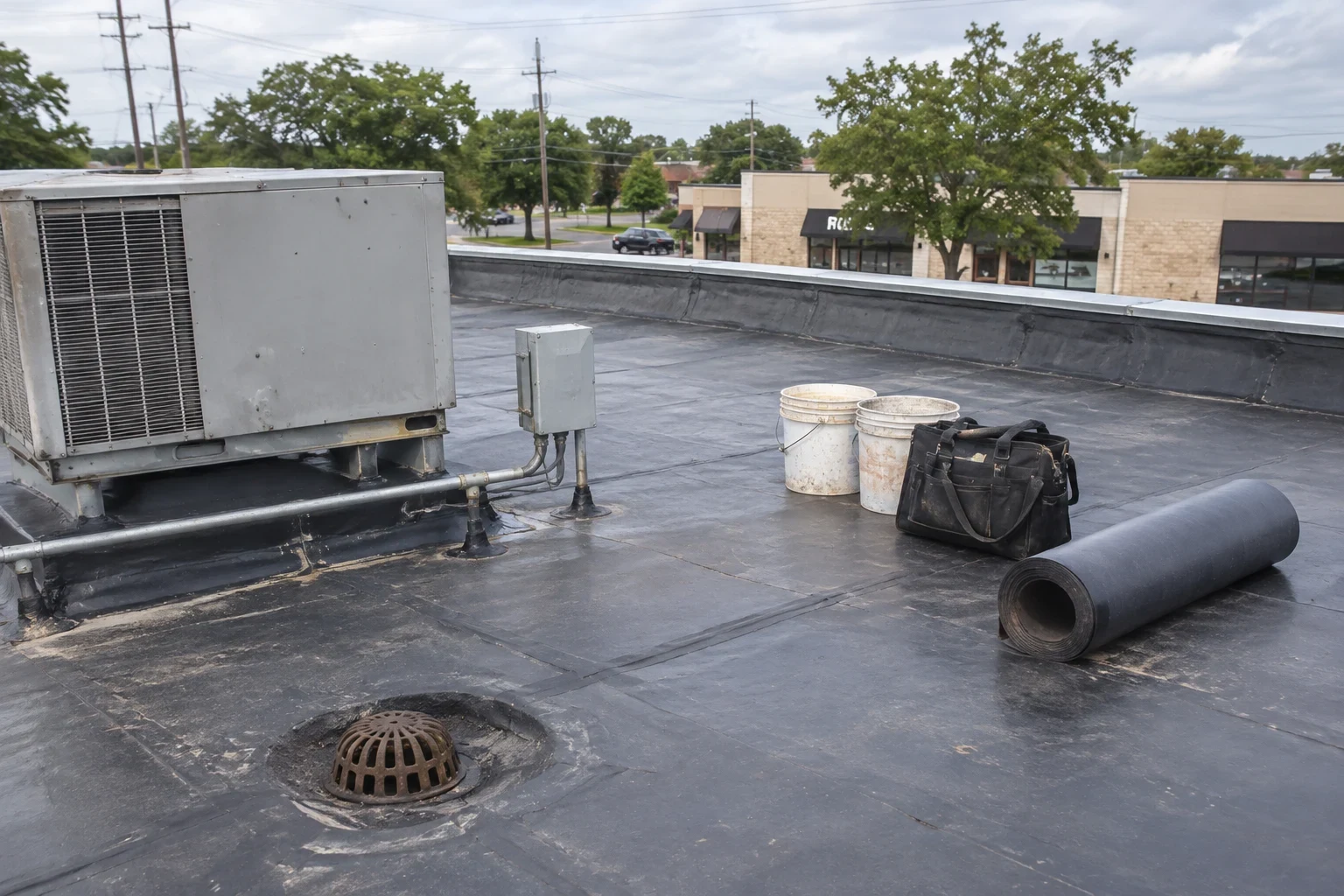
We clear and correct roof drains and scuppers so water leaves the roof instead of pooling near the edges.
Signs Your Commercial Roof Needs Attention
Water standing two days after rain
Ponding that lasts past 48 hours wears out membranes early and adds weight to the deck. It usually points to a drain issue or a low spot.
Stains spreading on ceiling tiles
A stain often shows up feet away from the actual opening because water travels along the deck. The source needs to be traced on the roof.
Blisters, bubbles or open seams
Trapped moisture or failed adhesive lifts the membrane. Left alone, those spots split and let water straight in.
Cracked sealant around units
Caulk around rooftop units and vents dries out fast in Texas sun. Once it cracks, every rain finds the gap.
Rising cooling bills
A dark, worn or wet roof surface holds heat and wet insulation stops insulating. Your HVAC works harder to keep up.
How a Commercial Roofing Job Goes
- 1
We walk the roof with you
We inspect the membrane, seams, drains and flashing, then check the leak from inside the building. You receive photos of everything we see.
- 2
Your options in writing
Every line on the estimate explains why it is there. If a smaller repair will solve it, we say so.
- 3
Planned so you stay open
We arrange the schedule, staging and deliveries so your doors stay open and customers keep their parking. Noisy or smelly work can be done in your quieter hours.
- 4
Cleanup each day and a last walk
We clear debris from the roof and the lot every day. At the end, we review the work with you and point out what to keep an eye on.
What Moves the Cost of a Commercial Roof
Every building is different, so we price from what we actually see on your roof. These are the factors that make the biggest difference. We explain each one on your estimate so nothing comes as a surprise later.
- Roof size and layout
- Square footage matters, but so do the number of corners, walls and level changes. A cut-up roof takes more labor than an open one of the same size.
- Condition of the deck and insulation
- Wet insulation has to come out before anything goes on top. A moisture check tells us how much of it is saturated.
- System and material choice
- TPO, modified bitumen, metal and coatings each cost differently up front and last differently over time. We compare them for your building.
- Penetrations and rooftop equipment
- Every unit, vent and pipe needs its own flashing detail. More of them means more labor.
- Access and permits
- Building height, lift or crane needs and local permit requirements all factor in. We handle the permit when the job calls for one.
Commercial Roofing Questions
Something not covered here? (972) 640-0594
Can you work while my business is open?
Usually, yes. We stage materials away from entrances, keep walkways clear and schedule the loudest work for quieter times when we can. We talk through your hours before we start.
Is a coating enough, or do I need a new roof?
It depends on what is under the surface. A coating works on a roof that is dry and structurally sound. If the insulation is wet or the membrane is failing across large areas, a coating will just trap the problem, and we will tell you that.
Why does my roof leak in one spot but the stain is somewhere else?
Water often enters at a seam or flashing, then runs along the deck before it drips through. That is why we trace leaks from the roof side instead of patching above the stain.
Do you work on buildings outside Lancaster?
Yes. We also take commercial roofing jobs in nearby towns like DeSoto, Red Oak and Cedar Hill. The Service Areas page lists the rest.
Do you also handle roofs on houses?
We do. Our Residential Roofing page covers that work. For interior build-outs on a commercial space, see Commercial Contracting.
Find Out What Your Roof Really Needs
We will look at your roof, show you the cause and walk you through your options. The estimate is free, and there is no pressure to pick the biggest job.